

The global mining and mineral processing industry faces increasing demands for higher recovery rates, improved concentrate quality, and energy-efficient operations. With declining ore grades and more complex mineral compositions, traditional separation methods often fail to achieve the desired efficiency. Flotation technology has become a critical component in achieving precise separation of valuable minerals from gangue. The High-Performance XJF Series Flotation Machine for Ore Processing provides a robust solution for plants aiming to enhance fine particle recovery while maintaining operational stability and process efficiency.
Modern ore processing plants are tasked with processing large volumes of low-grade ore while minimizing energy and water consumption. Key industrial sectors such as copper, lead, zinc, and precious metals rely heavily on flotation to extract valuable minerals efficiently. Inadequate flotation performance can result in reduced recovery, higher operating costs, and lower product quality. As a result, the demand for flotation machines that provide consistent separation, adaptability to various ore types, and long-term durability has increased significantly. The XJF series addresses these needs by combining mechanical precision, hydraulic efficiency, and operational flexibility.
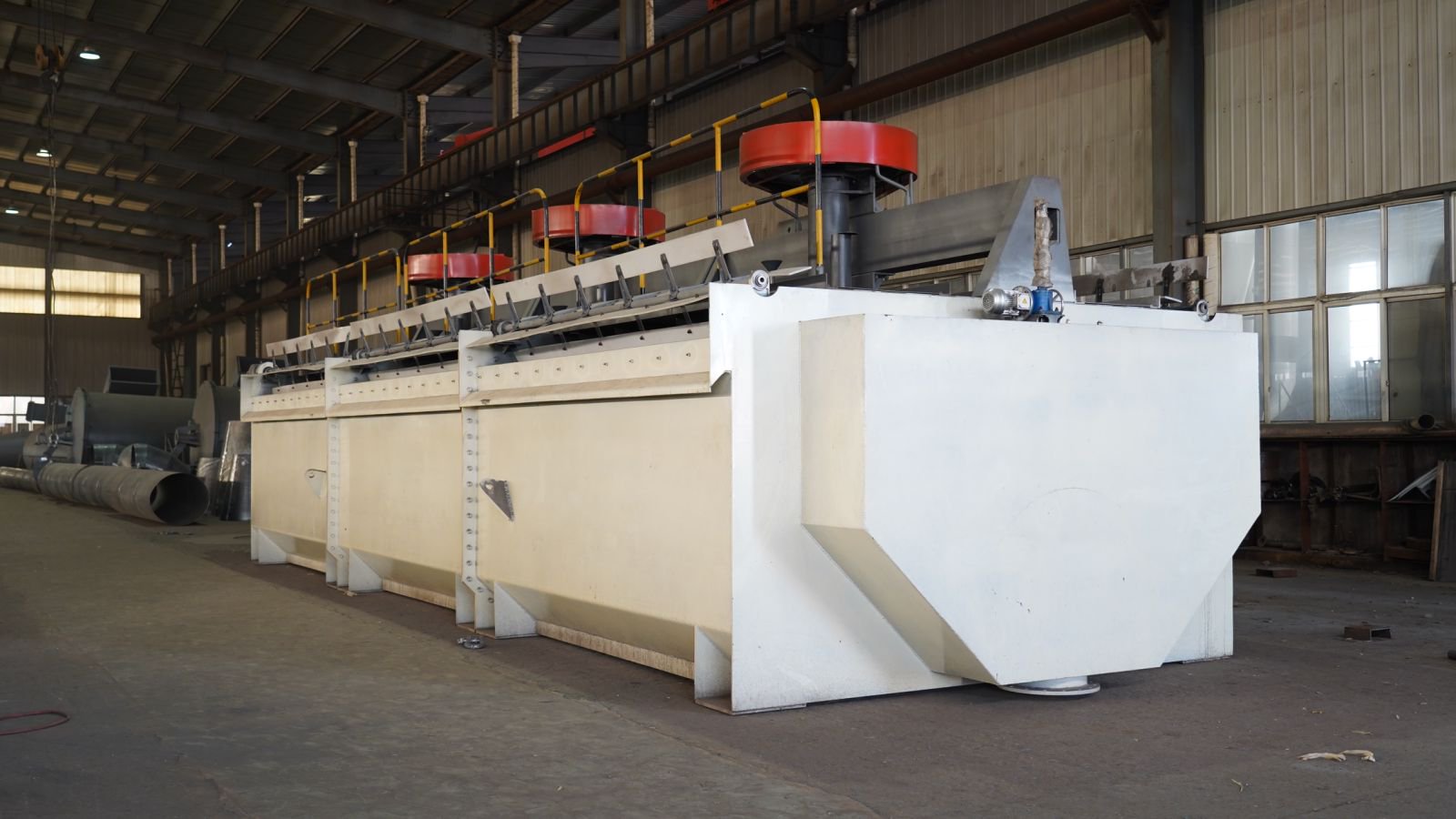
The XJF series flotation machine operates on the principle of froth flotation, where minerals are separated based on their surface chemistry and hydrophobic properties. The machine utilizes a mechanically agitated tank in which air is dispersed into the slurry. Fine bubbles attach to hydrophobic particles, causing them to rise to the surface as froth, which can then be collected as concentrate. The High-Performance XJF Series Flotation Machine for Ore Processing features advanced impeller designs that improve bubble distribution, reduce turbulence, and enhance particle-bubble collision efficiency. Adjustable rotational speeds and air flow rates allow operators to optimize flotation conditions for specific ore characteristics.
Structural integrity is critical for consistent flotation performance. The XJF series employs reinforced steel tanks and wear-resistant components, including high-hardness impellers and liners, to withstand abrasive slurries and continuous operation. The design ensures uniform pulp agitation, minimal dead zones, and efficient slurry circulation, which are essential for maintaining separation quality. Precision fabrication techniques, such as CNC machining and controlled welding, ensure tight tolerances in impeller geometry and tank alignment, reducing vibration and mechanical wear while enhancing long-term reliability.
Several factors influence the efficiency and quality of flotation processes in XJF machines:
Particle Size Distribution: Fine particles require controlled agitation to achieve effective bubble attachment, while coarser particles need sufficient lift without excessive turbulence.
Slurry Density and Viscosity: Optimal pulp density is essential for bubble-particle interaction; deviations can reduce recovery or froth stability.
Air Flow Control: Precise regulation of air flow ensures consistent bubble formation and minimizes entrainment of gangue particles.
Chemical Reagents: Proper selection and dosing of collectors, frothers, and modifiers directly impact recovery and concentrate grade.
Consistent monitoring and calibration of these parameters are essential for achieving optimal performance in diverse industrial applications.
Selecting the right supplier for XJF Flotation Machines involves evaluating both technical capability and support infrastructure:
Engineering Expertise: Suppliers with strong mineral processing knowledge provide process optimization recommendations and operational guidance.
Manufacturing Quality Control: Adherence to ISO or equivalent standards ensures consistent component quality and long-term reliability.
After-Sales Support: Access to commissioning services, spare parts, and technical consultation minimizes downtime and enhances operational continuity.
Proven Performance: Reference installations and case studies demonstrate effectiveness across various ore types and plant scales.
A reliable supplier ensures that the flotation machine can integrate seamlessly into existing plant operations and deliver sustained results.
Despite their advantages, flotation machines face operational challenges. High slurry abrasiveness can accelerate wear on impellers and liners. Inconsistent feed composition or fluctuating water chemistry can destabilize froth, reducing recovery. Furthermore, improper maintenance or misalignment of mechanical components can compromise efficiency. Addressing these challenges requires a combination of proper machine selection, operator training, regular inspection, and adherence to preventive maintenance protocols.
The High-Performance XJF Series Flotation Machine for Ore Processing is widely applied in base metal, precious metal, and non-metallic mineral processing. For instance, copper concentrators utilize XJF machines for fine particle recovery, improving overall metal yield. In gold processing plants, the XJF series enhances recovery of sulfide-associated gold particles. Similarly, zinc and lead processing facilities benefit from precise density separation, yielding higher-grade concentrates with lower tailings. These applications demonstrate the machine’s versatility and effectiveness in industrial mineral processing.
Industry trends are shifting toward automation, digital monitoring, and energy efficiency. Modern flotation plants increasingly integrate sensors for real-time measurement of pulp density, air flow, and froth characteristics. Data-driven adjustments allow operators to optimize separation conditions dynamically, improving both recovery and energy efficiency. Additionally, development of advanced materials for impellers and tank liners extends service life and reduces downtime. As ore grades decline and processing demands increase, high-performance flotation machines such as the XJF series will continue to play a critical role in sustainable and efficient mineral extraction.
Q: What ore types are suitable for XJF flotation machines?
A: The XJF series is suitable for base metals, precious metals, and non-metallic minerals requiring fine particle recovery.
Q: How does XJF improve separation compared to conventional flotation machines?
A: Advanced impeller design, precise air distribution, and adjustable agitation parameters enhance bubble-particle interaction, improving recovery and concentrate quality.
Q: Can XJF machines operate continuously in industrial plants?
A: Yes, they are designed for continuous operation with robust wear-resistant components and stable hydraulic performance.
Tel : +86-315-5282855
E-mail : jinzexuanmeijixie@gmail.com
Address : 1.6 km south of Xinjichang Road,
Tangshan City, Hebei Province, China

Copyright © 2017.Company name All rights reserved.More Templates


Этот веб-сайт использует файлы cookie, чтобы обеспечить вам максимально эффективное использование нашего веб-сайта.

 English
 Español
 Tiếng Việt
 Монгол



 WhatsApp
 телефон